How to Rise Above the Noise as an Artist (When Critics Get Loud)
Negativity is loud, but it does not get a vote in your studio unless you give it one.

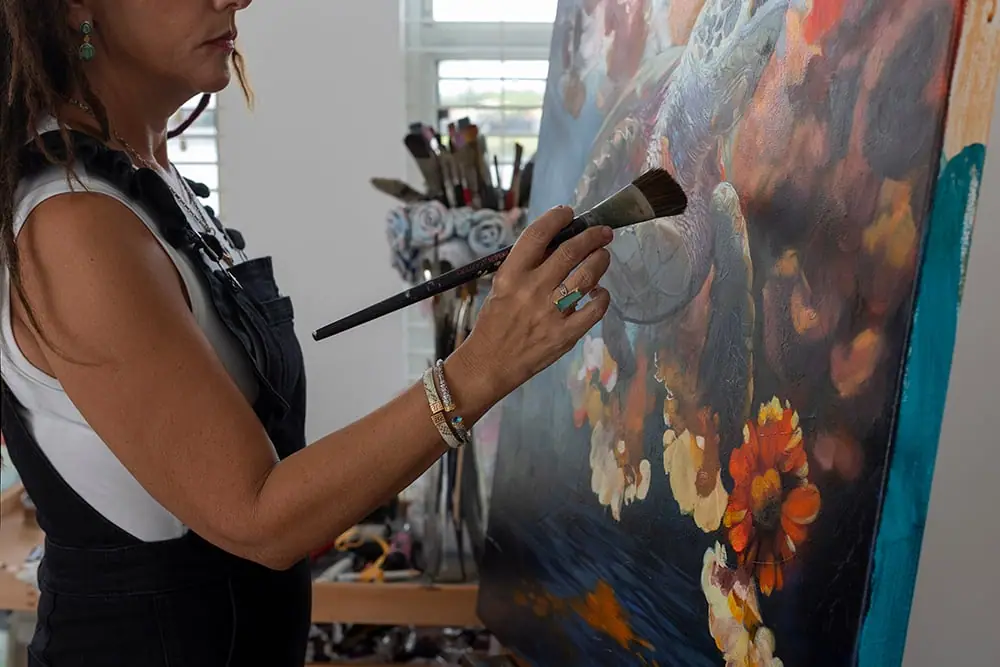
Not everyone will have positive things to say about your life as an artist. I have discovered that when I get criticized for what I make, what I say, or what I stand for, it usually means I am doing something right.
Rising above the noise does not require silence from the world. It requires that the noise no longer decides what happens in your studio. That distinction separates artists who quietly put down their brushes from artists who build a body of work the world eventually cannot ignore.
How do you rise above the noise as an artist?
You rise above the noise by staying strong in your convictions, protecting your studio momentum, and letting persistence answer your critics for you. Those three habits sound simple, yet they decide everything, because noise only wins when it changes your behavior.
Start with conviction. Know what your work is about and why you make it, clearly enough to say it in one sentence. When your vision is solid, a dismissive comment lands like rain on a roof. When your vision is vague, the same comment leaks straight into your foundation.
Then guard your momentum. Paint first, read opinions later. An artist who keeps producing carries a kind of gravity no critic can argue with, because the work keeps stacking up while the commentary evaporates.
Finally, choose whose voices count. Every artist needs a small circle of trusted eyes: a mentor, a peer, a teacher who has walked further down the road. Give those few people real influence over your work, and let everyone else’s opinion remain exactly that, an opinion.
Why do people criticize artists who chase their dreams?
Most harsh criticism is about what is happening inside the critic, and very little about you. When you live authentically and pursue your passion with strength, it works like a flashlight switching on in a dark room. It exposes things people would rather not look at in themselves.
If we are strong in our convictions, it will stir up people carrying their own inner turmoil and insecurities. They resent how sure we are in our vision. They might be jealous that we are running after our dreams and have the courage to face our obstacles. Some are simply afraid, so they feel triggered by everything about us.
Beneath the facade of “I know better than you” are little boys and girls who had big dreams too, dreams that once excited them and filled their hearts with wonder. People who stay constantly negative are often tortured by fear, by the inability to set a goal and chase it, or by the feeling of not being capable. Their reaction to your pursuit is rarely a measurement of your art.
What does constant negativity do to your art if you let it in?
Unchecked negativity drains your momentum first, then your goals, then your dreams. I have had so many artists tell me they are heartbroken that their family members do not believe their art will ever become a career. I have heard artists say they get discouraged every time someone tells them a painting looks bad.
When the negativity is constant, the words begin to drag them down and poison their thinking. They spiral into self-doubt until they can hardly bear walking back into the studio. They lose their momentum, and eventually their goals and dreams go with it.
That spiral is one of the most common forms of creative block, and it deserves to be taken seriously rather than brushed off. You can find more help for working through it in our creative block and identity guides. The cure is rarely a clever argument that wins over the critic. The cure is a studio habit so steady that doubt never gets the final word of your day.
When is criticism actually worth listening to?
Criticism is worth hearing when it is specific, when it comes from someone invested in your growth, and when it addresses your work instead of your worth. It is healthy to stay open-minded. Sometimes a hard conversation hands you a needed insight about your tone or your delivery, and you walk away better for it.
A useful critique names something you can act on: a value structure that reads flat, an edge that fights the focal point, a composition that ignores the elements of art. Vague verdicts like “it looks bad” give you nothing to work with, so give them nothing in return.
Here is a simple filter: ask whether this person wants you to grow or wants you to stop. Feedback from the first group is gold, even when it stings. Commentary from the second group is noise, even when it is polite.
Notice the difference in what each one leaves you holding. Real critique hands you your next move. Noise hands you a feeling about yourself, and that feeling has no brush in it anywhere.
How do you stand out as an artist in a noisy world?
You stand out by becoming more fully yourself and letting consistent work make your voice unmistakable. The market is crowded with artists copying whatever performed well last month, which is exactly why chasing art trends makes you blend in. Everyone is chasing the same ones.
Authenticity is the rarest material in the room. The convictions that draw criticism are the same convictions that make your work recognizable in a crowded feed. Sand them off to please everyone, and you also sand off the reason anyone would stop scrolling for you.
Consistency does the rest. One striking painting is easy to scroll past. Twenty paintings carrying the same convictions become a voice, and a voice is what people remember, follow, and collect. This is another reason protecting your momentum matters so much: every week the noise keeps you out of the studio is a week your body of work stops speaking for you.
Then let the work be seen. Standing out requires standing somewhere visible, so when a body of work is ready, promote your art with the same conviction you painted it with. Quiet excellence helps no one if it never leaves the studio.
What is the best way to respond to haters?
Ignore them and succeed anyway. I believe the best way to love a hater is exactly that: let the words roll off, refuse to give them power or a voice in your life, and keep building. Do not shrink back. Do not get quieter. Do not stop.
Stand strong in your convictions and press on toward your goals. The people hoping you fail will watch you and study you, and when your persistence pays off, something surprising happens. Your success leaves them nowhere to look except at their own road, their own life, and their own dreams. Some of them will finally start walking.
Love your haters. Love them in your perseverance for success.
The noise will always be out there. Your easel is waiting anyway. If you want momentum and a circle of artists who cheer for your growth instead of doubting it, come paint with us in the 2-Week Challenge and let your next finished piece do the talking.
Frequently asked questions
Does harsh criticism mean my art is bad?
No. Harsh criticism often says more about the critic than the work. Weigh it for specific, actionable insight, take whatever helps you grow, and let the rest go. One person's verdict, especially from someone uninvested in your growth, is not a measurement of your art.
What should I do when my family does not support my art career?
Stay open to genuine concern, but do not let doubt set your direction. Keep a consistent studio practice, build proof through finished work, and surround yourself with artists who understand the path. Belief usually follows evidence, and evidence comes from persistence.
How do I stop criticism from killing my motivation to paint?
Protect your momentum. Paint before you read comments, give stinging feedback a full day before you respond, and extract one useful insight at most. Momentum, not approval, is what carries an art practice through hard seasons.
What to practice this week
- Write the conviction behind your work in one sentence and tape it where you paint. Read it before every session.
- The next time a comment stings, wait one full day. Then pull out a single useful insight if one exists and discard the rest.
- Spend your first 30 minutes in the studio painting before you open any comments, feedback, or social media.
About the author
More from ElliKeep learning