How to Design Your Artistic Process From Your Creative DNA
When you build your process around who you naturally are as a creator, you stop fighting your instincts and start flowing with them. Here is how to find your temperament and design around it.
/Student%20Work%20-%20Ellis%20Hollering%202.jpg)

To design your artistic process from your creative DNA, build it around your temperament, the core energy behind why you reach for certain colors, subjects, and a certain pace. First name which of the four temperaments fits you: Power Impact, Raw Earth, Beauty Romance, or Whimsical Pop. Then choose your rhythm, your materials, and where you start a piece so they all match that energy. When your process fits who you naturally are, you stop fighting your instincts and start flowing with them.
Every artist has a one of a kind creative fingerprint, a blueprint that shapes how you see, feel, and express the world. When you design your process around that blueprint instead of copying someone else’s method, the work gets more authentic and a lot less exhausting. One of the most useful pieces of that fingerprint is your artist temperament, and once you know yours, you can build a way of working that feels like an extension of you rather than a costume you put on each time you walk into the studio.
What are the four artist temperaments?
There are four creative temperaments, and most artists lead with one while a second quietly blends in. Your temperament is the dominant creative energy behind your choices, and it explains why you gravitate toward certain colors, textures, subjects, and even the speed at which you work. No matter where you fall, each one carries real strengths, so this is not about ranking them. It is about recognizing yours so you can stop borrowing a process that was never built for you.
1. Power Impact
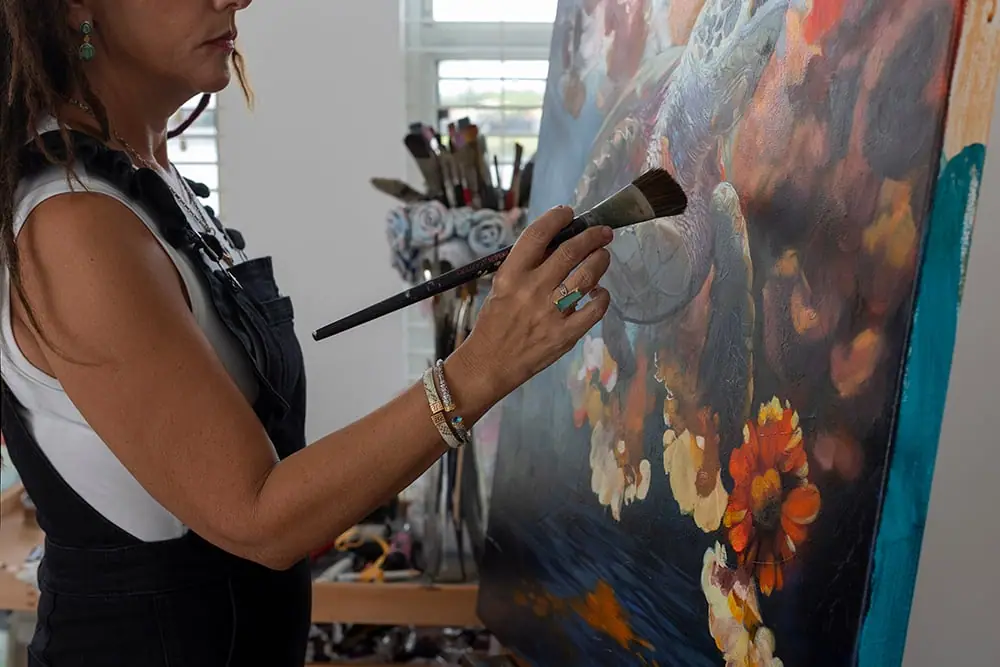
Power Impact is bold, energetic, and statement making. If this is you, your creative energy sparks with intensity and movement. You thrive on expressive marks, high contrast, and art that commands attention, and your process tends to be fast, passionate, and physical. You create best when you are bodily engaged with your materials, not tiptoeing around them.
To design your process: start with large, sweeping gestures to activate the canvas. Push dramatic value shifts early so you can see the punch quickly. Give yourself permission to work in bursts, because your creativity often arrives in waves. And choose tools that let you move, like large brushes, palette knives, squeegees, or mixed media scrapers.
2. Raw Earth
Raw Earth is grounded, tactile, and connected to the natural world. If this is your temperament, you feel pulled by the textures, rhythms, and organic patterns of nature. You prefer a process that is connected, slow, and deliberate, and you often build meaning through layers, letting the work reveal itself gradually rather than forcing it.
To design your process: bring in earthy textures like sand, carved gesso, handmade stencils, or natural mark making tools. Work in layers, and let each stage dry or evolve before you move on. Reach for a palette drawn from soil, stone, plants, and minerals. And build small rituals around your art making, a playlist, a few grounding breaths, or a walk outside before you begin.
3. Beauty Romance
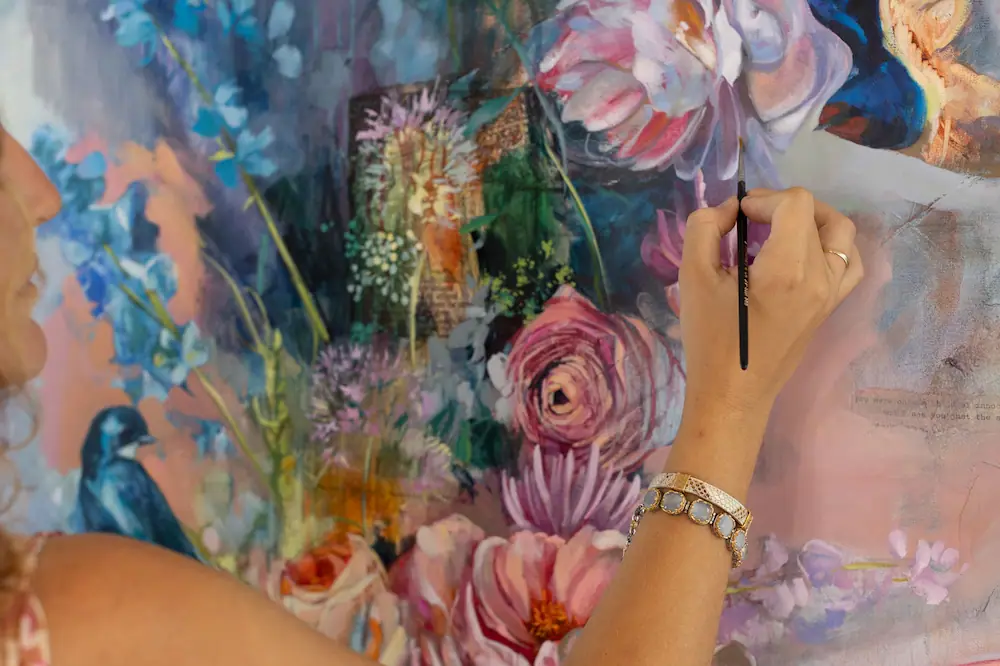
Beauty Romance is emotional, harmonious, and rooted in elegant storytelling. If you connect with this one, your art blooms from emotion and aesthetic harmony. You are drawn to graceful shapes, soft transitions, and imagery that carries depth of heart, and you tend to create slowly and intentionally, with a real desire to communicate meaning.
To design your process: begin with a storyline or atmosphere that captures the emotion you want your viewer to feel. Use gradual value transitions and layered glazes to build softness. Choose subjects that invite empathy, like figures, florals, animals, or symbolic narratives. And curate a quiet palette that supports your mood and holds the piece together.
4. Whimsical Pop
Whimsical Pop is playful, imaginative, and full of vibrant energy. If you flourish here, your creativity runs on color, curiosity, and experimentation. You bring joy into your work through unexpected combinations, quirky details, and lively palettes, and your process is exploratory and free spirited rather than carefully mapped.
To design your process: start with intuitive play, like collage scraps, doodles, or expressive spots of color. Allow spontaneity and resist planning every step, so surprises can lead the way. Experiment with bold, saturated colors and mixed media elements. And weave in patterns, outlines, graphic shapes, and pops of humor or symbolism.
How do you design your process around your temperament?
Once you know your temperament, you can build a process that feels natural and sustainable instead of one you have to push through. The trick is to make a handful of deliberate choices, and let each one point back to your dominant energy. Here is how to translate your creative DNA into a workflow you will actually want to return to.
- Identify your creative rhythm. Do you create best in fast bursts, long meditative sessions, intuitive play, or structured phases? Your temperament reveals your rhythm, so lean into it rather than resisting it. A Power Impact artist who forces slow, careful sessions will feel boxed in, and a Beauty Romance artist rushed into bursts will feel scattered.
- Choose materials that support your energy. Power Impact might prefer large canvases and palette knives. Beauty Romance may thrive with glazes and fine brushes. Raw Earth might reach for texture mediums and natural pigments. Whimsical Pop could play with markers, collage, or neon acrylics. Your tools should feel like an extension of your personality, not a set of rules.
- Build your process in phases that match your strengths. Consider whether you come alive through emotion, energy, structure, or play, and design your process to begin there. Starting where you are strongest gives every piece momentum before doubt has a chance to creep in.
- Honor how you make choices. Some artists like intuitive leaps. Others prefer thoughtful planning. Your temperament can tell you whether to script your work in advance or let it unfold in the moment. Neither is more serious than the other, and trying to work the opposite way usually just slows you down.
When you make those choices on purpose, the process stops feeling like a hurdle between you and the painting. It becomes the part where you settle in.
How does your temperament help you overcome creative blocks?
Your temperament gives you a creative reset button that actually fits how you work, which is why generic block advice so often falls flat. A reset built for the wrong energy will not move you. One matched to your temperament tends to loosen things much faster, because it meets you where your creativity already lives.
If you are Power Impact, move your body and begin with big gestures. If you are Raw Earth, step outside and reconnect with nature. If you are Beauty Romance, return to the emotion or the story behind the work. If you are Whimsical Pop, try something silly or unexpected to spark play. The point is to match the reset to your energy rather than reaching for whatever advice you read last. If a block has dug in deeper than a single session can fix, the longer view in how to overcome creative block goes further into what is really going on.
Why does designing around your creative DNA matter?
Designing your process around your creative DNA is one of the most freeing decisions you can make as an artist, because it ends the quiet war between how you want to work and how you think you should. When your workflow lines up with your temperament, you stop chasing someone else’s idea of perfection and start creating from the core of who you are. The work gets more authentic. More yours. Easier to keep doing.
Whether you lead with Power Impact, Raw Earth, Beauty Romance, or Whimsical Pop, your temperament is not a limitation to manage. It is your creative superpower, and the more you build around it, the more your process becomes a natural extension of you. From there, your temperament also becomes a doorway into your wider subject matter in art and the aesthetic that ties your work together, and the rest of the find your art style collection is here when you want to keep going.
If you want a structured, supported place to put this into practice and make real paintings instead of just reading about it, our free Two Week Challenge is built for exactly that. Design the process around who you already are, and let the rest follow.
Frequently asked questions
What is a creative temperament?
A creative temperament is the core energy behind your artistic choices, the reason you are drawn to certain colors, textures, subjects, and a certain pace of working. The four temperaments are Power Impact, Raw Earth, Beauty Romance, and Whimsical Pop. Knowing yours lets you build a process that fits your instincts instead of fighting them.
How do I design an artistic process that fits me?
Start by naming your temperament, then make four choices around it. Identify your creative rhythm (bursts, long sessions, or play), pick materials that match your energy, build your process in phases that begin where you naturally come alive, and let your temperament guide how you make decisions. The goal is a workflow that feels natural and sustainable.
What are the four artist temperaments?
Power Impact is bold, energetic, and statement-making. Raw Earth is grounded, tactile, and connected to nature. Beauty Romance is emotional, harmonious, and rooted in storytelling. Whimsical Pop is playful, imaginative, and full of vibrant energy. Most artists lead with one and blend a second, and each temperament holds real strengths.
Can I have more than one creative temperament?
Yes. Many artists see themselves in one dominant temperament and find a second one blends in. You might lead with Beauty Romance but reach for Power Impact when you want a piece to command attention. Lead with your dominant energy when you design your process, and borrow from your secondary one when a piece calls for it.
How does my temperament help with creative blocks?
Your temperament gives you a reset button that fits how you actually work. Power Impact moves the body and begins with big gestures. Raw Earth steps outside and reconnects with nature. Beauty Romance returns to the emotion behind the work. Whimsical Pop tries something unexpected to spark play. Match the reset to your energy and the block tends to loosen faster.
What to practice this week
- Name your dominant temperament, then write down the rhythm, materials, and starting point that fit it, and set up your next session that way.
- Run one painting using only the process that matches your temperament: the materials, the first move, and the pace it suggests, and notice how much less you fight yourself.
- When you hit a block, use the reset that matches your temperament instead of a generic one, and see whether it loosens faster.
Supplies used
About the author
More from Elli