Dimitra Milan: The Artist's Story and How She Found Her Style
Dimitra Milan started painting at twelve and spent years sounding like her parents before she found her own voice. Here is her story, her work, and the method that got her there.
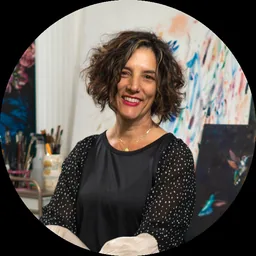
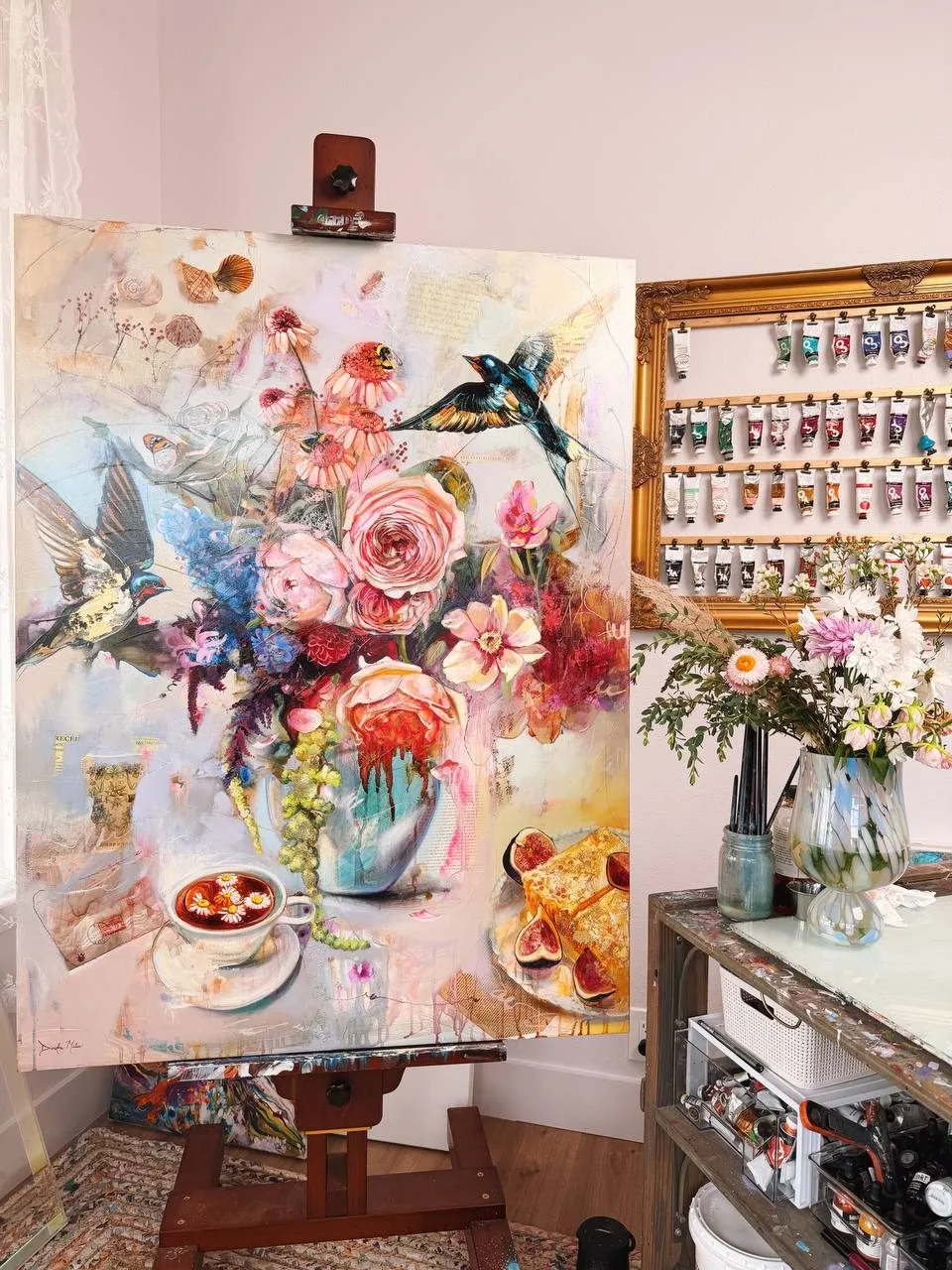
Dimitra Milan is a professional fine artist known for dreamlike paintings that combine girls, animals, and layers of collaged poetry into a single story. She grew up inside Milan Art Institute, started painting at about twelve in her mother’s art classes, and built a full art career as a young adult. What makes her story worth telling is not that she was born gifted. It is that she spent years sounding like everyone but herself, and then found her own voice through a method anyone can repeat.
If you came here searching her name because her work stopped you, this is the honest version of how that work came to be. It is also a roadmap, because the way Dimitra found her style is the same way you can find yours. Your voice is not a gift you wait for. It is your aesthetic, what you find beautiful, plus your taste, which you keep elevating, plus your process, the materials you use and how you go about making the painting. It should evolve slowly, stay recognizable, and be completely, authentically you.
Who is Dimitra Milan?
Dimitra Milan is a fine artist who paints narrative, dreamlike scenes built from figures, animals, and fragments of poetry. She started painting at around twelve years old, and at first it was simply a hobby. She painted for fun in her mom’s art classes, surrounded by the work and the teaching that would later shape her whole career.
Things got more serious when she sold a few early pieces. That first taste of someone wanting her work was a real motivator, and she leaned in. In those early years she mostly painted horses and abstracts. The talent was clearly there. The voice was not, not yet, and she knew it.
What kind of art does Dimitra Milan make?
Dimitra Milan makes narrative, dreamlike paintings that layer girls, animals, and collaged poetry into one image that tells a story. This is the work people recognize as hers. It does not simply depict a subject. It reads as personal and emotional, the way a remembered dream does, and that storytelling quality is exactly what separates her mature paintings from the horses and abstracts she made as a beginner.
That signature did not appear overnight. Early on, people told her that her work looked just like her parents. She hated hearing it. Anyone who has been compared to the artists they learned from knows that particular sting. It is not an insult, it is a stage, but it feels like a verdict at the time, and she was desperate to find something that was hers alone.
How did Dimitra Milan find her artistic style?
Dimitra Milan found her style through a focused portfolio class she took with her mother, not through waiting for inspiration to strike. Her mom worked with twelve students, and they met once a week for a critique over eight weeks. Dimitra calls it basically art bootcamp, and the structure is the whole lesson.
Here is what that class actually required, and why each piece of it matters:
- Four finished pieces every week. Volume forces your real preferences to the surface. You cannot overthink your way to a style. You paint your way there, and a quota of four completed works a week generates the sheer quantity that makes your true taste visible.
- Ten artists you deeply admire, printed out. Each student found ten artists they loved and printed pictures of their work to study. This is the part beginners resist because they fear it will erase their originality. It does the opposite.
- Imitation on purpose. While building the portfolio, students let their favorite artists influence them directly. Dimitra was looking hard at Anke Schofield and Maxfield Parrish, loving their work and trying to implement pieces of their approach. The point is not to copy forever. It is to absorb decisions you cannot yet make on your own, which is also why copying artists helps you find your style.
By the end of the first round, Dimitra had a cohesive style going, totally different from her usual work. And she was not happy with it. It did not feel like her. She sold some of the pieces and signed up to take the whole class again.
Why did it take Dimitra three tries to find her voice?
It took Dimitra Milan three full rounds of that same portfolio class to find a voice that felt genuinely her own, and that detail is the most useful part of her whole story. The first attempt gave her something cohesive but borrowed. The second still was not it. By looking at her paintings from those rounds, you would never even guess that Anke Schofield and Maxfield Parrish were her influences, which tells you how thoroughly imitation gets digested into something new.
Then, on the third try, something broke open. She discovered a combination that made her fall in love with her own art for the first time. She started combining girls and animals, then layering them with collaged poetry. She started telling stories through her paintings. From there it took off, and she was able to launch her art career in earnest.
That class, the one she repeated three times, laid the foundation for what would eventually become the Mastery Program. The method that worked for Dimitra is the same method thousands of beginners now follow. If you want to understand the bigger framework around all of this, our guide on how to find your art style walks through it step by step.
What is Dimitra Milan’s advice for finding your own voice?
Dimitra Milan’s core advice is that your voice is built through study, imitation, and relentless practice, not discovered by waiting. Here are the specific tips she points to, drawn straight from how she did it herself:
- Find ten artists you truly love and admire their talent without ego. Let yourself be moved by their work.
- Consume yourself with art. You have to breathe it in. Surround yourself with it until it becomes part of how you see.
- Look at different interiors and imagine where you would want your art to hang. Picturing the finished work in the world helps clarify what you are actually making.
- Paint, paint, paint. The only way to find your style is hours and hours behind the paintbrush. There is no shortcut around the volume.
- Try a 100 Paintings Challenge. Committing to a large number of finished pieces is the single fastest way to surface your real preferences.
- Find out what makes you cry and what makes you angry. This is how you learn what matters to you, and ultimately what your voice is. Your voice lines up with what you were meant to say to the world. Every artist has something inside to express. You have to dig deep and find out what it is.
- Look at the world around you and find what is beautiful. Everyone sees beauty differently, and that difference is exactly what makes your voice unique.
Notice that not one of these is about talent. They are all about attention, volume, and honesty. That is the encouraging part. If your style feels out of reach right now, you are most likely in Dimitra’s first or second round, doing the work but not yet seeing yourself in it. Keep going. The third round is where it changes.
Does an artist ever stop developing their style?
No, and Dimitra Milan is clear about this: a good artist never feels like they have arrived. Her style and voice have kept developing into something much greater than that first breakthrough. Every year she evolves and makes new discoveries in her work, because she believes a great artist keeps pushing into new ways of expressing themselves and new things to say.
There will never be an end to it. As long as you are painting, you will be chasing the elusive vision in your heart. You may come close, you will never quite reach it, and that gap is exactly what keeps you creating. This is good news, not bad. It means you are never stuck with one fixed style. Your voice is a living thing that grows for as long as you keep painting, which is also the heart of how to develop your own art style over a whole career.
Final thoughts on Dimitra Milan and finding your voice
Your artistic voice will develop over time if you put in enough hours at the canvas. It is a deeply personal process that asks you to synthesize your experiences, your dreams, and the inspiration you take from the artists you admire. Dimitra Milan is proof that this works, not because she was a prodigy, but because she did the unglamorous thing three times in a row until something true emerged.
So look at her paintings and let them inspire you, then go make your own. Find your ten artists. Commit to volume. Ask yourself what makes you cry. The fastest way to start that process with real structure and feedback is our free Two Week Challenge, a guided way to make your first paintings instead of just reading about them. And when you want to keep going, the rest of our find your art style collection is here for the long road ahead.
Frequently asked questions
Who is Dimitra Milan?
Dimitra Milan is a professional fine artist who paints dreamlike scenes that combine girls, animals, and layers of collaged poetry. She grew up inside Milan Art Institute, started painting at about twelve in her mother's art classes, and built a full art career as a young adult. Her work tells stories rather than simply depicting subjects, and that storytelling is the heart of her recognizable style.
What kind of art does Dimitra Milan make?
Dimitra Milan makes narrative, dreamlike paintings that layer figures, animals, and fragments of poetry into a single image. Her early work leaned toward horses and abstracts, but her mature voice came together when she began combining girls and animals with collaged text to tell a story. The result reads as personal and emotional, not just decorative, which is what gives her paintings their pull.
How did Dimitra Milan find her artistic style?
Dimitra Milan found her style by taking a focused portfolio class three separate times, not by waiting for inspiration. Each round she made four finished pieces a week and studied ten artists she admired. The imitation and volume slowly burned away the borrowed habits until something genuinely hers appeared: girls, animals, and collaged poetry woven into one painting.
Did Dimitra Milan go to art school?
Dimitra Milan learned to paint inside her family's art education world rather than through a traditional university art program. She trained in her mother's classes and took a portfolio course that later helped shape the Mastery Program. Her path is a clear example that structured study and serious practice, not a specific degree, are what build a real artist.
How long did it take Dimitra Milan to develop her own voice?
It took Dimitra Milan years and three full rounds of the same portfolio class to find a voice that felt truly her own. The first two attempts produced cohesive work that still did not feel like her. Only on the third pass did she discover the combination that became her signature, which is why she says an artist never really finishes evolving.
What to practice this week
- Choose ten artists whose work moves you, print their paintings, and study what specific choices you admire in each one.
- Commit to volume: make four finished pieces a week for several weeks so your real preferences surface through sheer quantity.
- Ask yourself what makes you cry and what makes you angry, then write it down, because your subject matter lives in those honest answers.
Supplies used

About the author
More from Elli